“Island” Dinghy
My first boat was an Island dinghy which I bought from my boss and on which he had learned to sail. AI yielded
Construction: They are heavy, sturdy 14-foot boats constructed using clinker (overlapping) planking, typically in mahogany, and fastened with copper rivets, often designed to be uncapsizeable.
Rigging: The gunter rig was specifically chosen because it allowed the mast and spars to be stored completely inside the hull when the dinghy was hoisted on board a warship.
Use and Legacy: They were used by the Royal Navy for roughly 25 years before being replaced by fiberglass "Bosun" dinghies. Many were sold into private hands.
Mine was certainly capsizeable as with a heavy but not very mobile crew, I gybed, he didn't and we rolled it over and set a personal record for time in the water before being rescued -about a hour and a half.
Another adventure was when we launched down a ramp between a shipyard wall and a boat being worked on. Our mast cut their power line creating a new vocabulary in marine swearing.
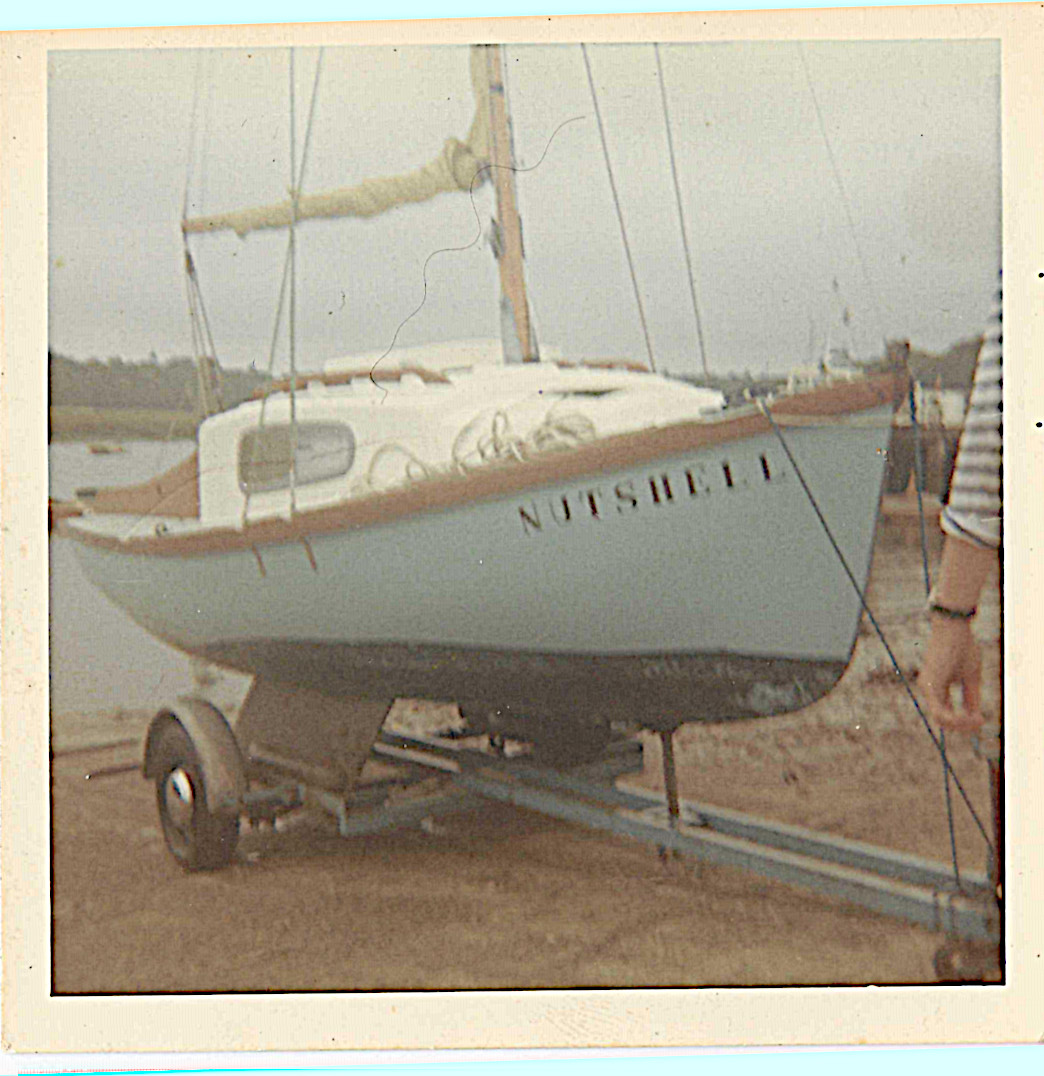
“Nutshell ”
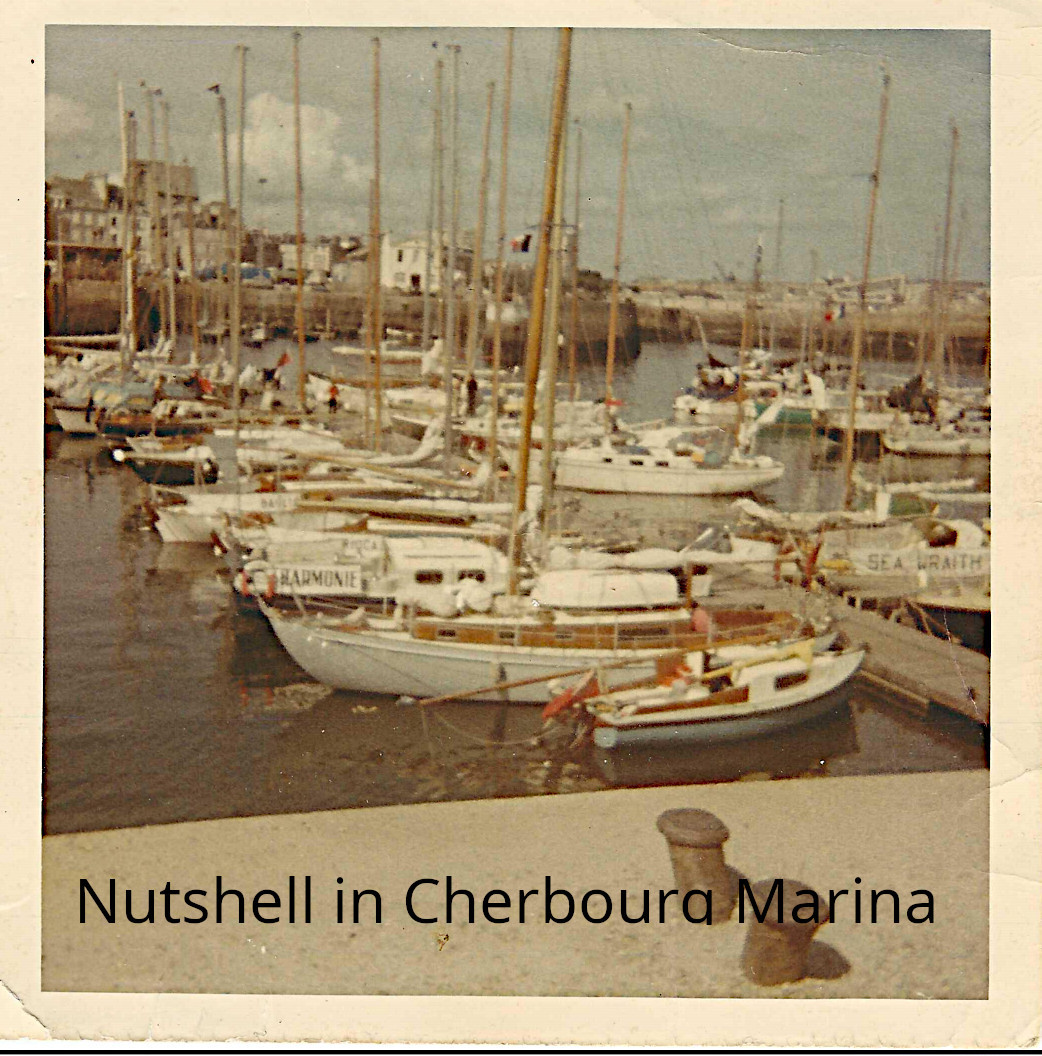
We bought a small bilge keeled cabin sloop with a lawn mower engined outboard off the builder's stand at the Earls Court Boat Show. Its 16ft 9inch length length just squeezed us both in and two small children. We named it Nutshell for my then wife Hazel. One wit watching me painting the name on the bow asked why we had chosen Nuts Hell. It gained our entry to the River Beaulieu and a much coveted mooring.
The motor was a disaster and eventually replaced with a Seagull. Its sailing performance was leisurely, but I sailed it across to Cherbourg where it was the smallest to boat to cross the Channel to arrive there that weekend.
On one cruise in the Solent I sailed with a very skilled and experienced sailor who arrived with an army surplus parachute to use as a spinnaker. Its power started us submarineing even in a modest wind and the experiment was quickly abandoned. When we sold Nutshell it was towed North and some years later I saw it moored in the Firth of Forth in Scotland as I crossed the bridge.
“Golondrina of Hamble ”
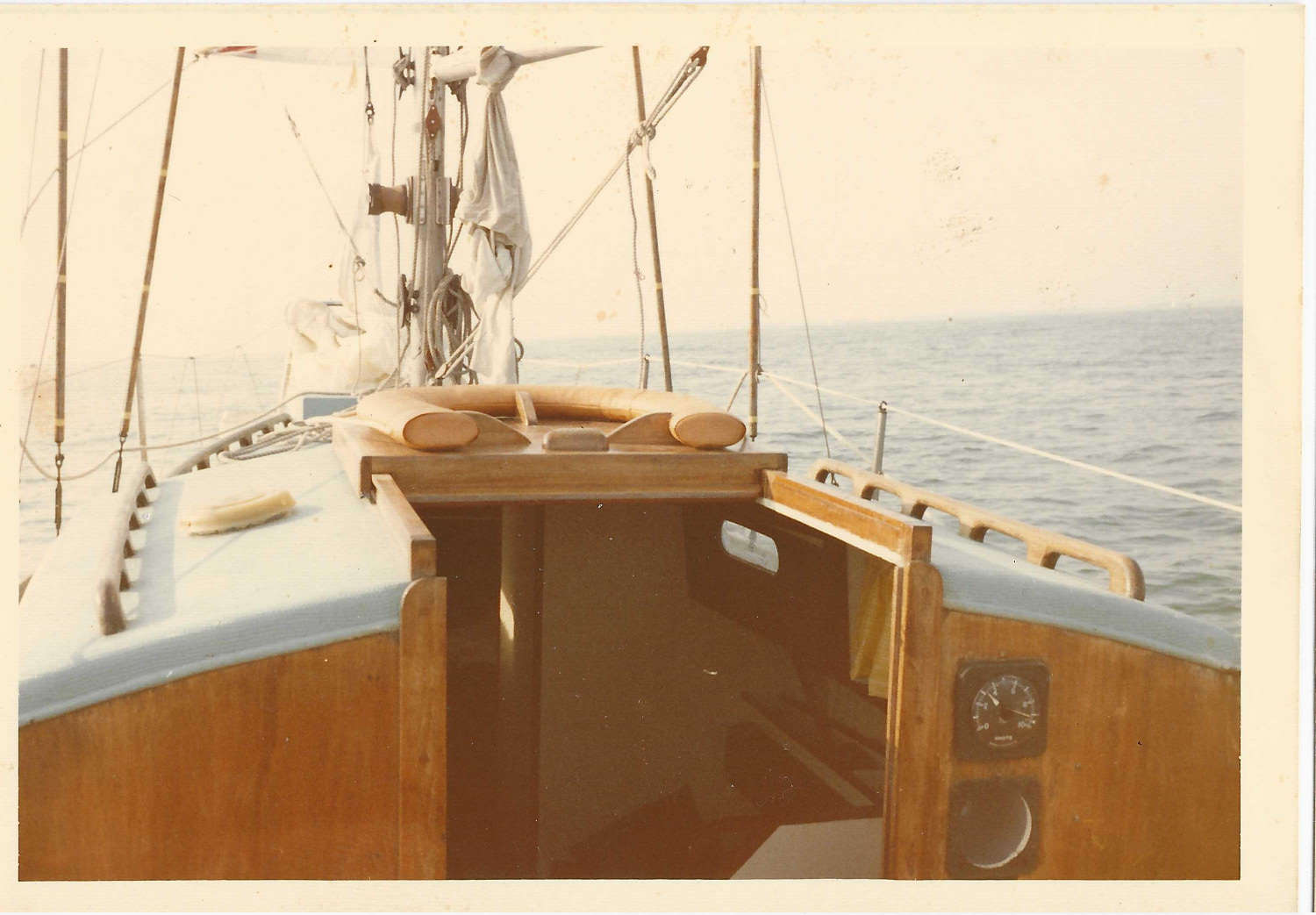
Looking for a bigger boat and a better sailing experience, I decided to buy a new Folkboat. They were being built in Gdansk, now in Poland, in timber. My order failed through exchange control regulations with Eastern Europe but I found a second hand very similar boat in England. It was designed by Harley, best known for his motor boats, 26ft with similar hull lines to the Folkboat and carvel planked in elm on an oak frame. The motor was an inboard 2 cylinder petrol Stuart Turner whose magneto suffered badly from dampness. The name was "Golondrina of Hamble" whose registration has vanished on the UK register She was moored on the Beaulieu river and from there I sailed several weekends alone to Cherbourg and cruised the South and West Coast of England.Francis Chichester was given the next mooring upstream to us where he kept Gypsy Moth V. He was dying of lung cancer and yet he paddled his dinghy to the boat and struggled to climb aboard. On one occasion I motored across in my dinghy and offered to help.He refused and increased his efforts to climb up and maintain his independence. That has modeled my own approach as ageing gives me physical limitations.
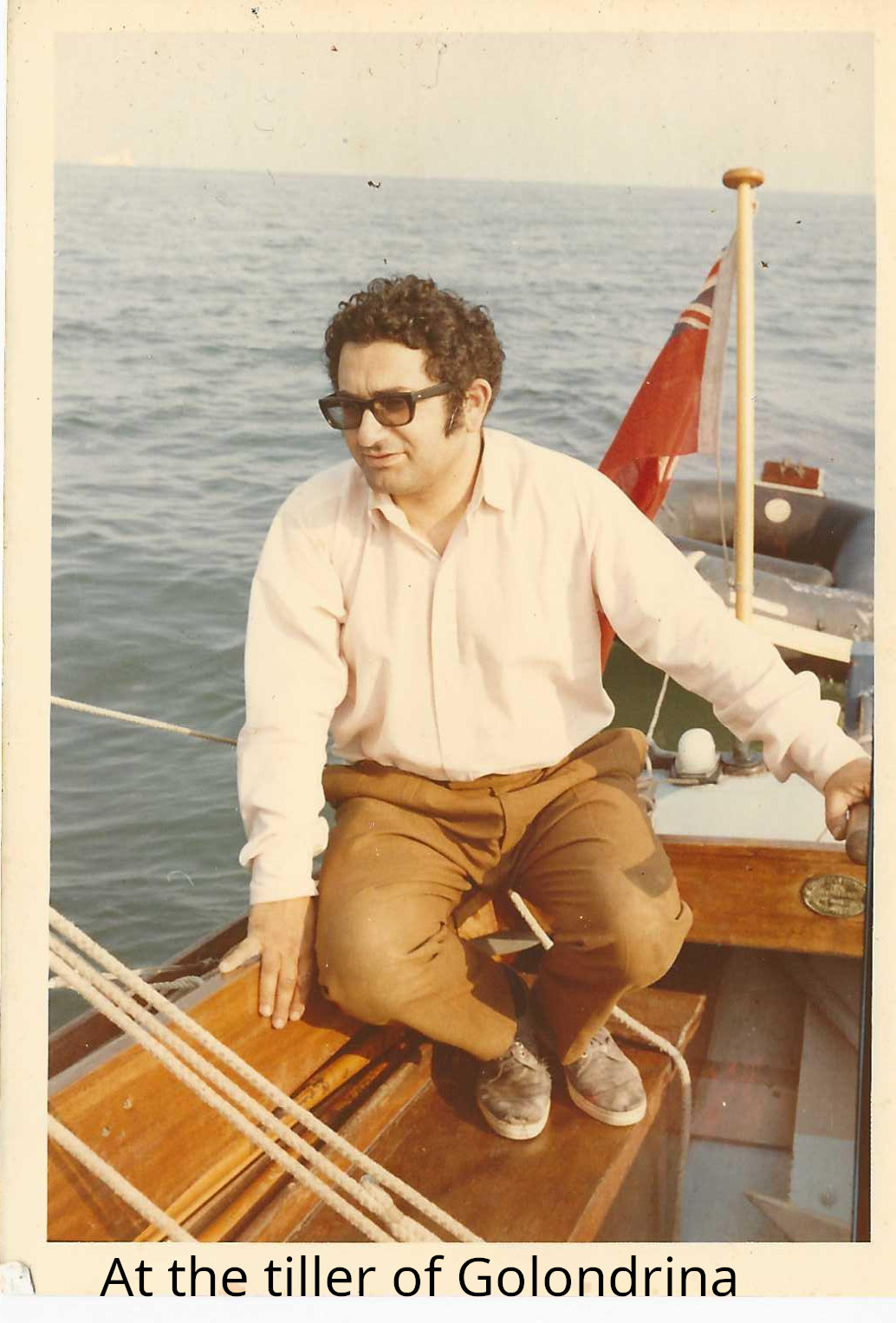
Sailing alone again in the East Atlantic, I watched the moon landing from the cockpit,on a 12volt TV. This put my sense of loneliness on an empty sea in perspective as they planted a flag on an even more lonely and empty space. My last intention was to participate in a race from the Solent to the Azores. To qualify I had to complete an ocean voyage alone of 500 miles. That I did off the South Coast of Ireland, but was then forced to abandon the idea and to sell a much loved boat as we moved to Australia.
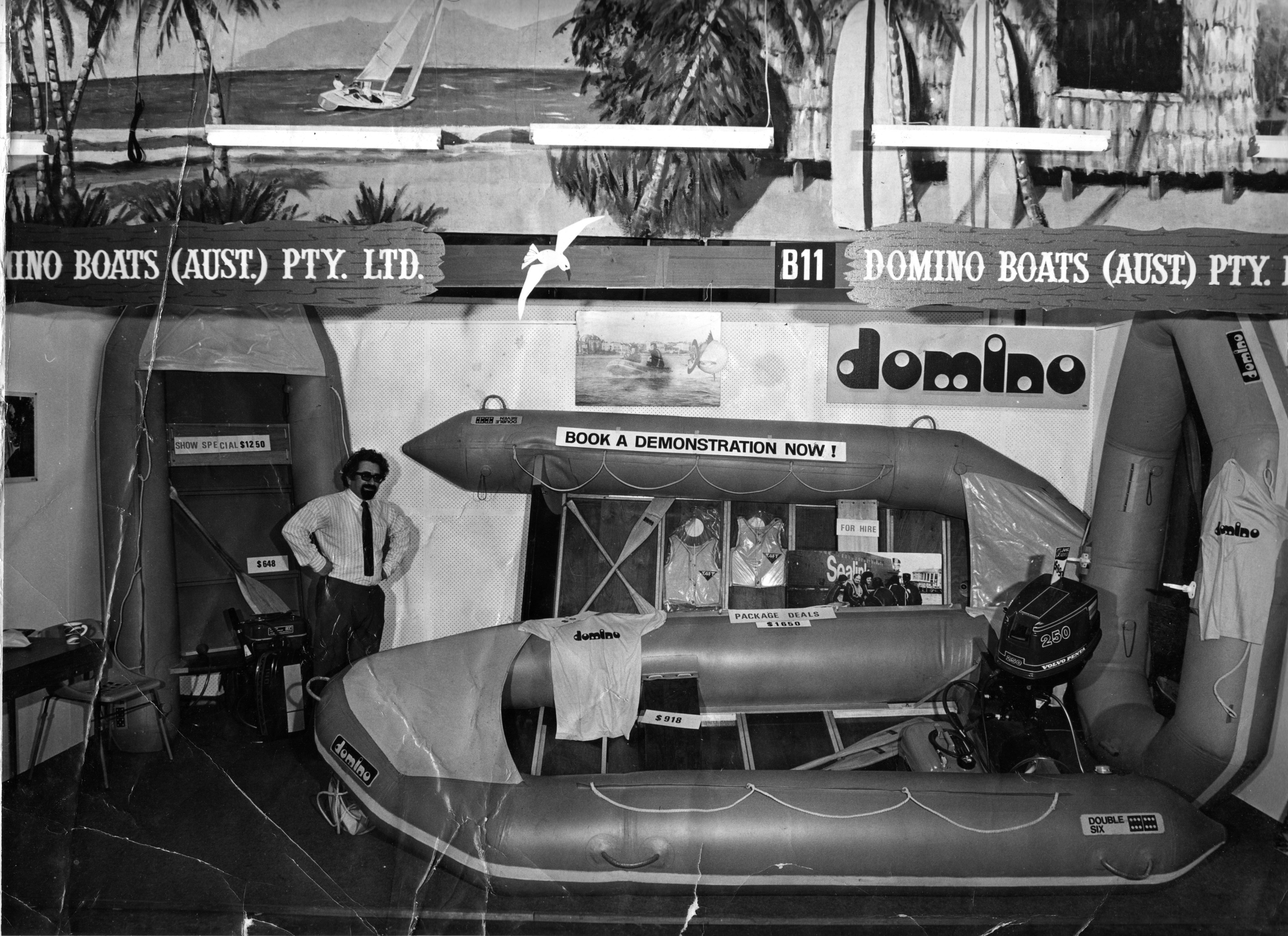
I once again visited the Earls Court London Boat Show where I met an entrepreneur whose business had possibilities of development in Australia. He had created a significant market in the U.K. for DIY wet suits. He sent prospective buyers a procedure for making the measurements needed for him to provide a kit of precut neoprene parts. They were given a free kit of glue, instructions and some neoprene offcuts to try to glue them properly and if they were happy he supplied the kit. The main market was divers and so he added to the range inflatable boats to meet their needs. He had come to Australia as a member of the British Admiral's Cup team and brought with him one of his largest boats as a runabout. One evening with a boat full of his mates he was arrested crossing the water runway of the Solent Flying boats to Howe Island operating out of Rose Bay, Sydney. He returned home with no further thoughts about an Australian market. Clearly there was no market for his wetsuit kits as Australian waters did not need such thick insulation and the divers had the money to buy branded wetsuits. However, inflatables were rare and most yachties used a tinny as a dinghy. Equally it was unlikely that the market could be bothered with gluing them. We agreed that we would form a company in Sydney which would import kits and I would manufacture them. His limited range of three powerful boats did not meet the need for tenders and so I designed a range for that market and gave him the details to make kits for the UK.
“Domino Boats ” A range of inflatable boats
More to come
“Sailor Vie” Hartley Tahitian 45 ft Centre Cockpit Ferro Cement Sloop
Sold in April 2001. The end of a twenty year dream. We built the
boat
with the intention of sailing to Europe and retiring to a cruising
life. Illness and overweight reduced our ability to manage the
physical effort. Weekends afloat to finish the details became
relaxing social, fishing afternoons and the maintenance backlog
rose faster than the working time devoted. We hoped that
the new owner will realise his dream through Sailor Vie and it would be
cruising UK waters four years later.
Memories remain of lazy weekends on the harbour when we pretended to
work on the fit-out but fished for crabs and bream and chatted with
friends.
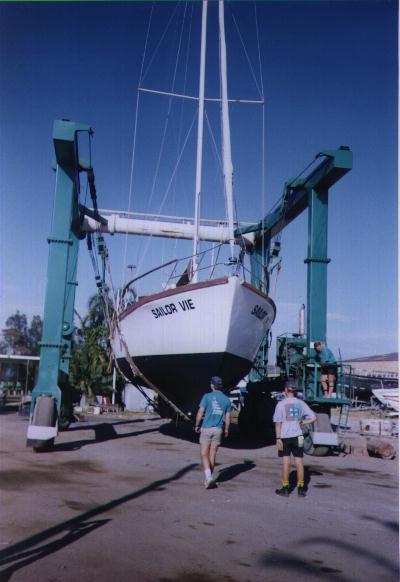
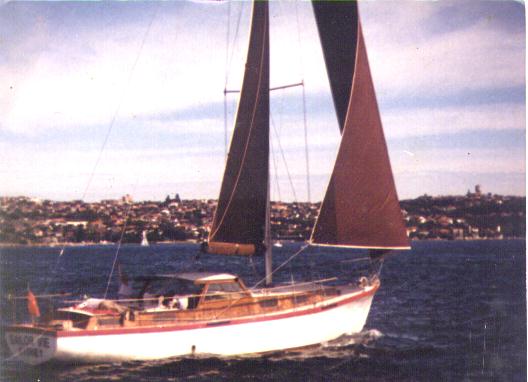
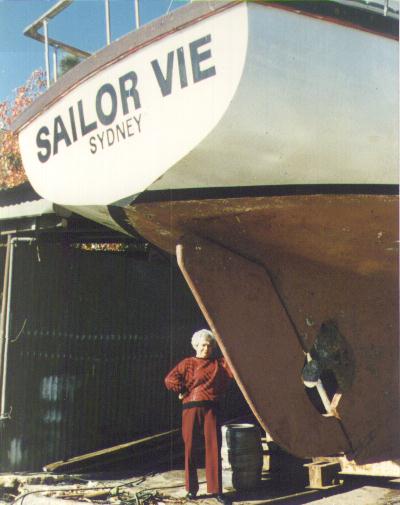
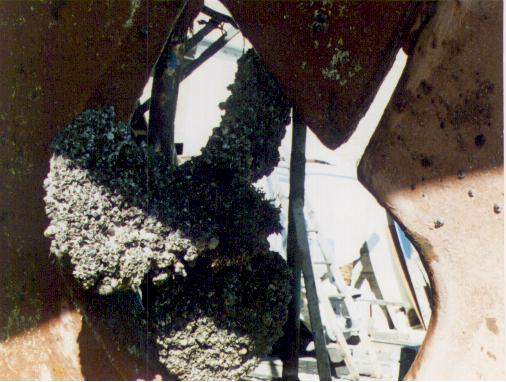
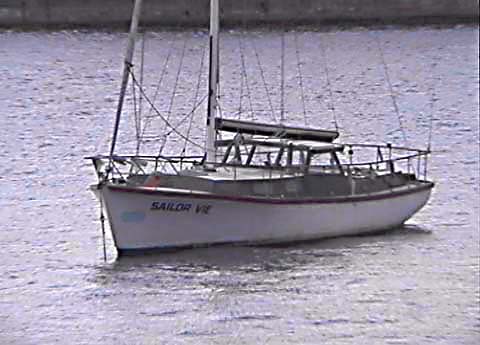
Swinging Mooring – Mort Bay Balmain Sydney
Construction Begun 1977, Launched 1982 Owner Built
Keel
Internal - Lead
Cabin
- Thai Teak and Brazilian Walnut
Roof
– Dynel, laminated marine ply on Queensland maple laminated
beams
Cast
Deck Fittings
Plough
Anchor – S&L Manual Winch -100 metres chain
Mast
– Aluminium – Internal Halyards
Boom
- Hood roller reefing system
Boom
Vang – McIntyre Marine
Foresail
– Hood furler
Sails
Hood Main and Jib in Brown Bainbridge Cloth
Hood
MPS in Dacron
Winches
- Barlow
Standing
Rigging – Stainless- Twin Back stays
Hatches
- Goiot
Ventilators
- Solar
Engine
– Ford 6cyl Diesel Marinised by Brown Bros Balmain
Propellor
– 3 Blade bronze
Auxiliary
Diesel – Honda 15 HP twin Diesel driving 240 v 7.5
kva
alternator
Deck
Pump
Depth/Speed/Log
– Brookes and Gatehouse
CB
Radio
Autophone
VHF
Dickenson
Diesel Cooking stove/Oven/ Water Heater/ Cabin heater
Solar
charging 2 –42 watt panels with regulators
Freezer
– components only
Desalinator-
McIntyre Marine Power Survivor
Toilets
– Aft sealed to flexible tank
Hot
Water Showers
Avon
Dinghy and Mercury Outboard
Windows
- Lexan and laminated glass
Steering
– Hydraulic – Cetrak Autopilot
Compass
- Danforth
3
Batteries
Water
Tanks – Flexible-200 litres
Fuel
tanks steel 2 X 400 litres
Bilge
pumps Henderson and Jabsco
Sea
Cocks - Bronze
LifeBuoy
and Lifejackets
Teak
rail –s/s staunchions
Anchor locker
2 berths
Hanging Locker –Heads with hot shower
Teak dining table and settee berth in Main cabin
Double berth guest cabin with hanging locker
Galley with sink stove etc.
Engine under floor
Auxiliary in locker
Navigatorium
Aft heads (sealed)
Double berth and settee berth
Large locker
And the last views at Easter 2001
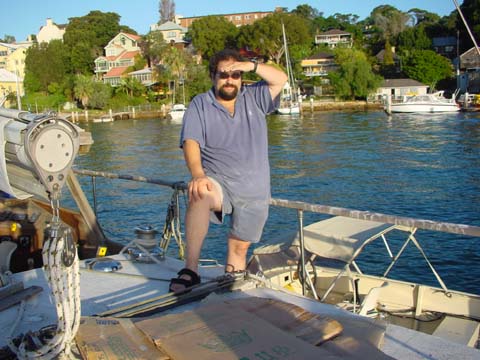
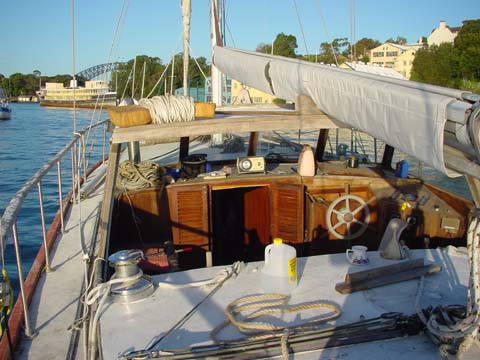
Julien who
organised the sale and the view from our mooring in Balmain
looking towards the Sydney Harbour Bridge
The purchaser abandoned her in a mangrove swamp near Darwin N.T.
The Darwin Council paid a salvage company $25K to remove and wreck what remained after scavengers.
This salvage was featured on a Channel 7 T.V. programme and sadly, Sailor Vie is no more.
Terminé Jeudi le 9 Avril 2026
 >
>